
Building a home is one of the biggest dreams for any family. But many homeowners start without understanding the actual process. This leads to delays, budget issues, and design mistakes.
Here is a simple, step-by-step explanation of how a house is built with the help of an architect — and how you can avoid common pitfalls.
1. Initial Consultation: Understanding Your Vision & Lifestyle
The architect begins by understanding:
Your family needs
Your plot size
Your budget
Your style preferences
Your future plans
A home is not just rooms — it’s a representation of how you live.
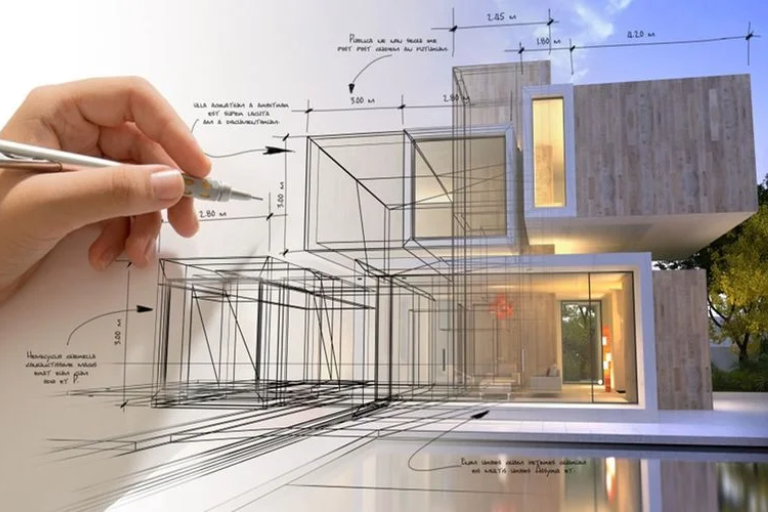
2. Concept Sketch & Floor Plan Development
Based on your lifestyle, the architect prepares:
Concept sketches
Initial floor plan
Space layout
Room positioning
Sunlight & ventilation planning
This is where your dream begins to take visible shape.
Pitfall to avoid: Changing the plan repeatedly after construction begins.
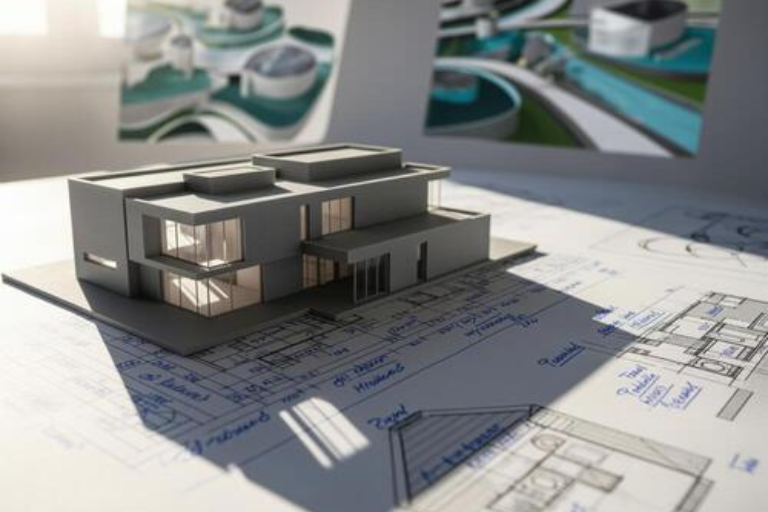
3. Final Drawings: Structural, Electrical & Plumbing Planning
This is the backbone of construction.
Architect + structural engineer prepare:
Structural drawings (columns, beams, slab thickness)
Electrical layout
Plumbing line layout
Staircase design
Elevation drawings
These ensure your home is safe, durable, and comfortable.
4. Government Approvals & Documentation
Many people don’t know what permissions are needed.
Your architect assists with:
Municipal approvals
Building permits
Compliance documents
Avoid starting construction before approvals — it leads to penalties.
5. Contractor Selection & Cost Estimation
A good contractor is essential.
Architect helps you choose based on:
Past work
Material commitment
Cost transparency
Time discipline
A detailed BOQ (Bill of Quantity) prevents hidden expenses.
6. On-Site Construction Monitoring
The architect ensures:
Work is done as per the drawing
Materials used are correct
Safety is followed
Quality is maintained
Changes (if any) are documented properly
This avoids rework and saves money.
Conclusion
From the first sketch to the final home, an architect is your guide, planner, and protector.
With proper communication, planning, approvals, and monitoring, your dream home becomes a smooth and satisfying experience.